




I. What is BEC? — The Voltage Converter for Drones
1. Core Definition
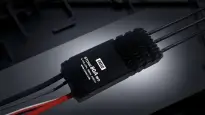
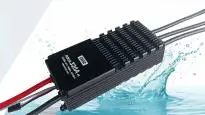
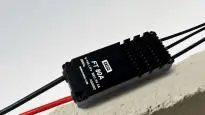
BEC i.e. Battery Elimination Circuit(Battery Elimination Circuit), is an integrated DC step-down module within the ESC. It converts the high-voltage power battery of the drone into a low voltage of 5V or 6V, supplying power to low-voltage equipment such as the flight controller and receiver.
2. Why is BEC necessary?
The high voltage of drone power batteries, coupled with the low rated voltage of flight controllers and other equipment, risks damaging components if connected directly. The BEC, acting as a “voltage translator”, resolves this power compatibility issue while eliminating the need for separate batteries for low-voltage devices. This dual benefit gives rise to its moniker: “battery-saving circuitry”.
II. How BEC Works: Simply put, it's ‘high voltage to low voltage’.
- Power supply: Obtaining high-voltage direct current from power batteries such as 3S and 4S;
- Blood pressure reduction: Through linear or switching power supply circuits, the high voltage is stably stepped down to 5V/6V;
- power supply: Outputs low-voltage power to devices such as flight controllers and receivers via 3-pin servo cables, XT30 connectors, etc.
III. Two Core Types of BEC for Drone ESCs: Linear vs Switching Power Supply
Currently, BECs for drone ESCs are primarily categorised into two types, each exhibiting significant differences in structure, efficiency, and suitable applications. Selection must be precisely matched to requirements:
Linear BEC:
- Structure: No high-frequency components, circuitry is straightforward
- Efficiency: 60%-75%, with noticeable heat generation
- Specifications: Compact size, low cost, 1-3A output
- Characteristic: Significant voltage fluctuations
- Application: Light-load small unmanned aerial vehicles
Switching Power Supply BEC:
- Structure: Contains MOSFETs and inductors, with a complex structure
- Efficiency: 85%-95%, low power consumption
- Specifications: Slightly larger size, higher cost, 3A+ output
- Characteristics: Strong voltage regulation and interference resistance
- Application: Heavy-duty medium-to-large unmanned aerial vehicles
- Linear BEC units exhibit poor heat dissipation; if obstructed during installation (e.g., positioned beneath the battery), they are prone to triggering thermal shutdown protection.
- Switching power supply BECs, whilst offering excellent performance, may exhibit electromagnetic interference issues in low-cost products; it is advisable to select reputable brands.
IV. Essential Reading! The 3 Core Parameters of BEC (Key Selection Criteria)
Selecting BEC eliminates the need to study complex circuits; focusing on three core parameters ensures stable power supply:
- Common specifications: Primarily 5V and 6V, with some BECs supporting dual voltage switching (operated via the ESC's DIP switch).
- Key Selection Points: Strictly match the device's rated voltage. Flight controllers and receivers typically operate at 5V, while high-torque servos are recommended to run at 6V for enhanced power. Refer to the device manual for specific requirements.
- Avoid Pitfalls Guide: Connecting a 5V device to a 6V BEC will cause burnout; using a 5V BEC to drive a 6V servo results in weak power and slow response.
- Unit: Ampere (A), comprising the ‘rated current’ for continuous output and the ‘peak current’ for maximum short-term output.
- Selection criteria: The total load current must not exceed the BEC's rated current. It is recommended to reserve a 20% margin to prevent overloading.
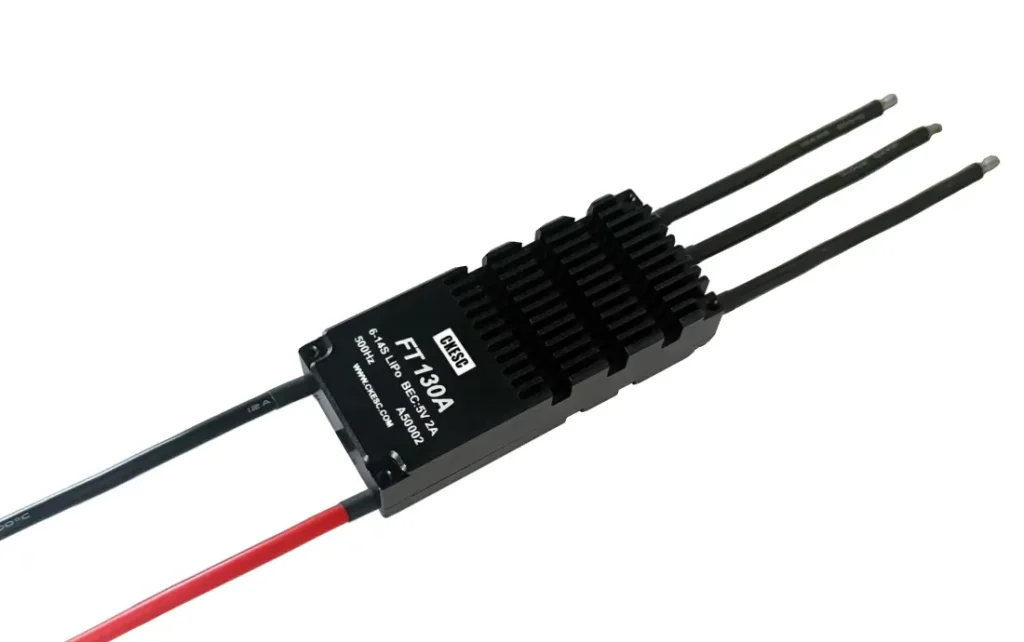
- Efficiency and performance correlation: BEC efficiency directly impacts heat generation and battery life; higher efficiency reduces both heat output and battery power consumption.
- Efficiency selection criteria: Linear BEC efficiency should be ≥70%, while switching power supply BECs require ≥85%. Most branded products will explicitly state these specifications.
V. Troubleshooting Common BEC Faults
Troubleshooting and Resolution:
- Insufficient output current: Replace with a BEC rated for a higher current.
- Linear BEC Overheating Protection: Reserved Space for Heat Dissipation
- Voltage mismatch: Verify the rated voltage of the equipment.
2. Flight controller / receiver signal interference (e.g. servo chatter, flight controller drift)
- Troubleshooting: Electromagnetic interference from low-cost switching power supply BEC, wiring proximity to flight controller signal lines.
- Resolution: Replace with a different brand of BEC; run power and signal cables separately (to avoid parallel routing); add ferrite ring filtering.
- Troubleshooting: Linear BEC overload; inadequate heat dissipation; low conversion efficiency; battery voltage mismatch.
- Resolution: Switch to a switching power supply BEC; add ventilation holes; verify battery compatibility specifications.
VI. Conclusion: Though small, the BEC serves as the cornerstone for stable drone flight.
- Load adaptation: For light loads, select linear BEC; for heavy loads, select switching BEC.
- Electrical parameter matching: Voltage-adaptive equipment with 20% current reserve margin
- Performance Assurance: Linear BECs require dedicated thermal clearance; for switching BECs, prioritise reputable brands.
By mastering the above principles, you can easily handle the selection and use of BEC units, making your drone's power supply system more reliable.